Energy Management in Compressed Air and Gas Systems
Make energy consumption visible and optimize your system
Compressed air is used in almost every industrial process. While electrical energy is regularly monitored, the energy required to produce compressed air often remains unchecked. The result: one of the largest energy consumers in the factory remains invisible.
Measuring and monitoring the compressed air system helps to reduce energy waste, increase system reliability and lower operating costs.
Page Overview
- What is energy management in compressed air systems?
- Why is energy management important?
- Where to measure in a compressed air and gas system?
- What can be achieved through energy management?
- Practical Tips for Better Energy Management
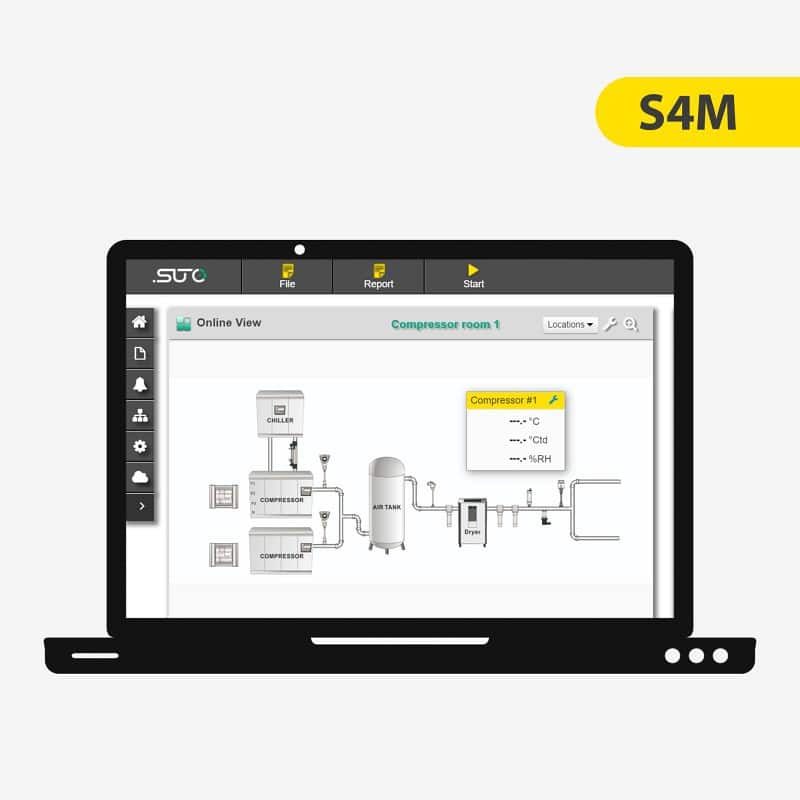
- How SUTO iTEC Instruments Support Your Energy Management
What is energy management in compressed air systems?
Energy management means measuring and analyzing energy consumption to optimize efficiency. In compressed air and gas systems, energy management focuses on:
- Measuring how much electrical energy the compressors and dryers consume
- Monitoring how much compressed air is produced and consumed
- Finding and eliminating losses and inefficiencies
- Calculating the exact energy costs of compressed air
Without measurements, there is no transparency and no control.
Why is energy management important?
Producing compressed air consumes large amounts of electrical energy. In some cases, compressed air production accounts for up to 30 percent of a factory’s total energy consumption.
Typical reasons for high energy costs:
- Compressors running at full load during production peaks
- Leaks in the compressed air network wasting valuable energy
- Pressure drops in the piping system
- Dryers and filters consuming energy unnecessarily
- Poorly maintained equipment reducing system efficiency
Where to measure in a compressed air and gas system?
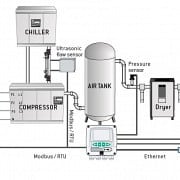
To manage energy efficiently, measurements should be installed at the key points of the system:
- Compressor power supply: Measure current and electrical power consumption, Identify peak loads and base loads
- Compressed air flow at the compressor outlet: Measure how much compressed air is produced
- System pressure at different locations: Detect pressure drops caused by filters, piping or leaks
- Dew point at the dryer outlet and point of use: Ensure dry compressed air to protect your process
- Cooling water consumption (if applicable): Monitor cooling water flow to optimize cooling efficiency
- Key consumption points in the network: Understand where and how much air is used in different production areas
What can be achieved through energy management?
By continuously monitoring these parameters, operators can:
- Calculate the true compressed air energy costs by day, week or month
- Identify when compressors run inefficiently, for example during peak loads
- Detect leaks and reduce energy waste
- Plan maintenance based on real system performance
- Optimize dryer operation to save unnecessary drying energy
- Ensure stable process conditions through constant pressure and air quality
Practical Tips for Better Energy Management
By continuously monitoring these parameters, operators can:
✔ Measure power consumption and air flow continuously
✔ Repair leaks as soon as possible
✔ Compare energy input and air output to detect inefficiencies
✔ Optimize compressor control to avoid unnecessary run times
✔ Plan maintenance based on real operating conditions
✔ Regularly review dew point and pressure trends
Automatic alarms prevent costly downtime
The system can generate alarms when key values are out of range:
• Pressure below or above the required level
• Dew point too high, risking water contamination
• Unexpected flow increases, indicating a possible leak
• Higher power consumption for the same compressed air productionOperators receive early warnings and can react before production is affected.
How SUTO iTEC Instruments Support Your Energy Management
SUTO iTEC offers measurement instruments for all relevant parameters in compressed air and gas systems:
- Power meters for compressors and dryers
- Flow meters for compressed air and gases
- Pressure sensors for system monitoring
- Dew point transmitters for air quality control
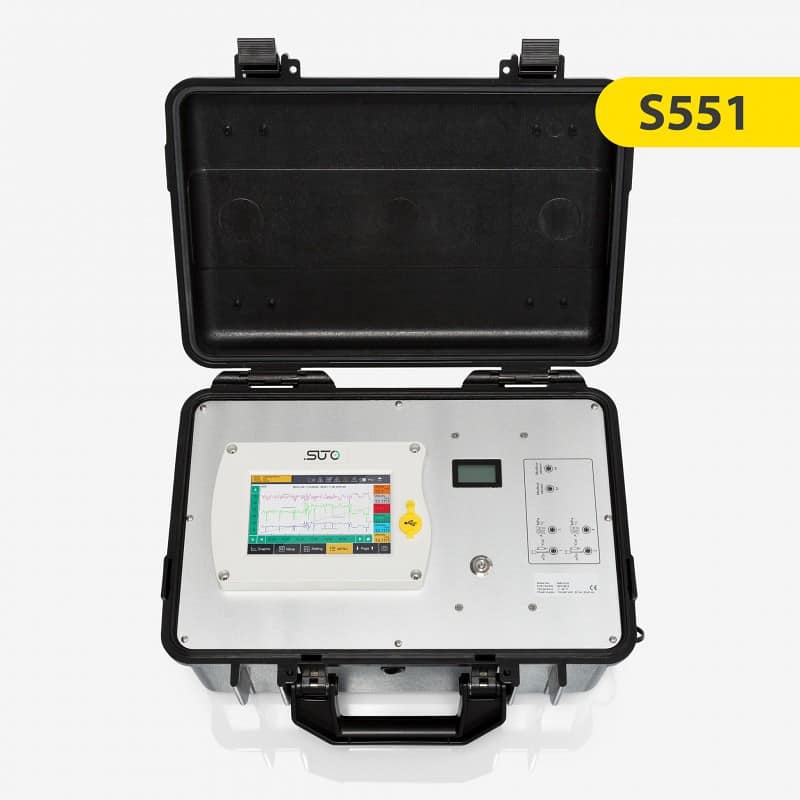
- Portable data loggers for temporary measurements and audits